
Mobile loading access

Mobile Yard Ramps

Plan the route from yard level to the vehicle.

Define the vehicle interface, load context, available approach space and operating site before requesting a configuration review.

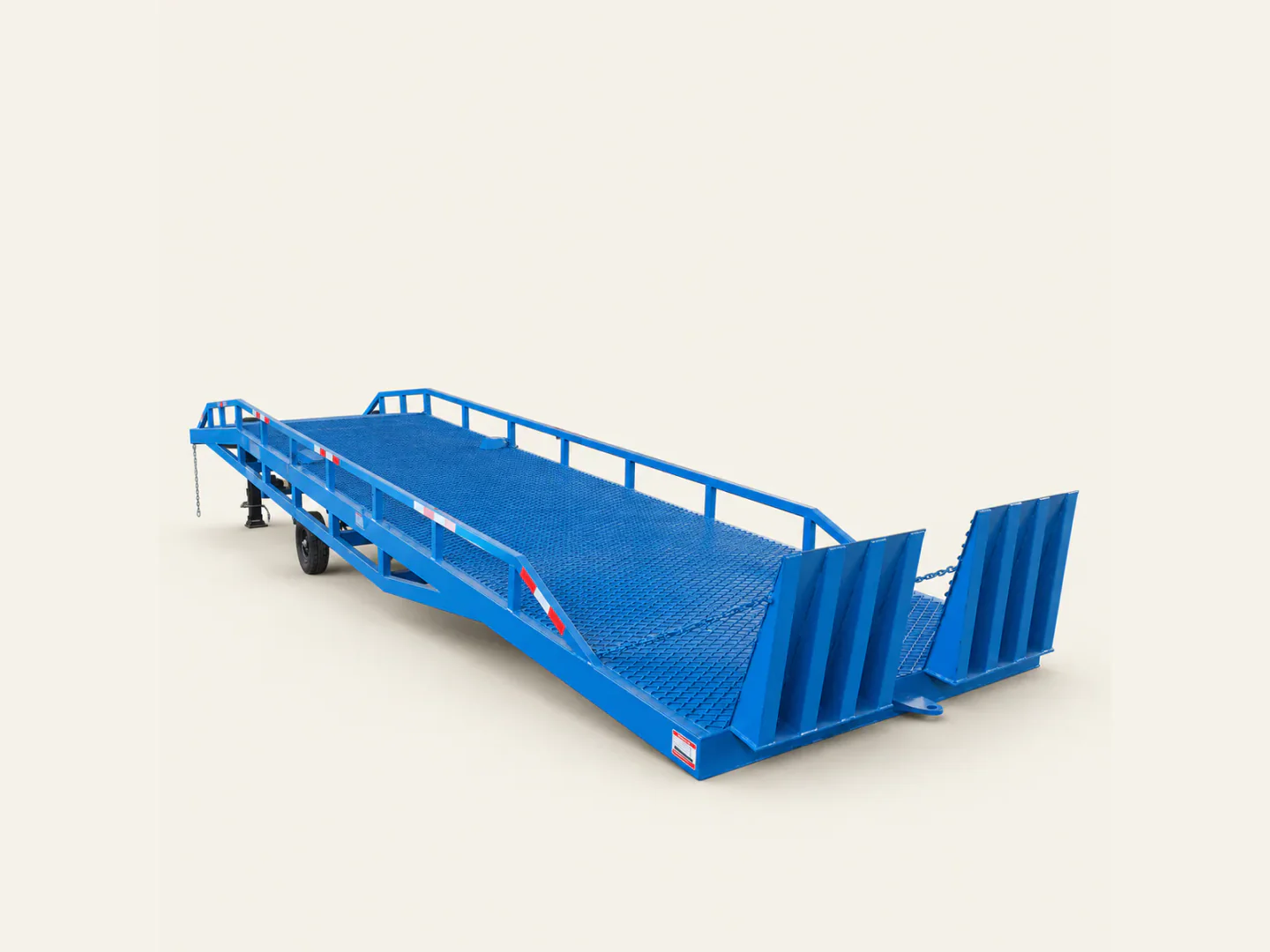
Complete blue mobile yard ramp in a three-quarter view on a warm off-white background
Complete mobile yard ramp · three-quarter view

01 / Category boundary

Define the task before the configuration.

A mobile yard ramp is a relocatable sloped-access equipment category used to plan a route between yard level and a raised loading interface.

Selection depends on the complete interface: vehicle or dock height, traffic direction, load and handling-equipment context, available approach length, ground conditions and destination requirements. These inputs should be reviewed together rather than treated as interchangeable dimensions.

Raised interface
Record the target vehicle-bed or dock interface and the height range that matters to the project.
Approach route
Check the available straight-line space, turning approach and movement path around the ramp.
Operating context
Describe the load, handling equipment, traffic pattern, ground condition and working environment.

02 / Equipment guide

Understand the structure and compare the task.

Connect the equipment arrangement to your work area, movement route and operating conditions.

Structure and movement

The defining parts of a mobile yard ramp are the sloping deck, its supporting structure and the interfaces at ground and vehicle level. The deck is a travel route, so a useful specification describes the complete load path, including the handling equipment, rather than the goods alone.

Start at the ground approach, follow the deck to the raised end and mark the transfer into the vehicle or dock. Record changes in level and direction along that route. Also describe the separate task of moving or storing the ramp; a loading position and a storage position need their own site measurements.

What to compare

Compare a yard ramp with a fixed dock leveler by the starting level of the route. Yard-to-vehicle access requires an approach through the yard. A dock leveler begins at an existing raised dock. Keep each layout on its own drawing instead of applying one equipment envelope to both tasks.

Conditions to establish

A load description does not establish the condition of the ground, the vehicle interface or the approach geometry. Provide those inputs separately, including surface changes and nearby traffic. Identify which measurements are known and which still need a site survey.

03 / Applications

Place the equipment in its working context.

Start with the task, access route and surrounding conditions, then review the configuration against the complete site brief.

01

Yard-to-vehicle access

Plan a sloped route between yard level and a measured vehicle-bed or dock interface.

02

Changing loading positions

Review projects where the loading point, traffic direction, movement route or storage position may change.

03

Handling-equipment movement

Bring the goods, handling equipment, load context, approach space and ground condition into one route review.

05 / Selection inputs

Start with the interface, then define the route.

A useful enquiry separates measured site information from the operating requirement. The review can then focus on one coherent loading route.

  1. 01

    Vehicle or dock height

    Provide the relevant raised-interface height or range and note how it was measured.

  2. 02

    Load and handling equipment

    Describe the goods, total operating load context and the equipment expected to travel on the route.

  3. 03

    Available approach space

    Share the usable yard length, width, turning constraints and any fixed obstacles.

  4. 04

    Ground and environment

    Explain the surface condition, drainage, indoor or outdoor use and other site constraints.

  5. 05

    Movement and storage

    State how often the ramp may need to move and where it will be stored when it is not in use.

  6. 06

    Destination and project timing

    Include the destination, quantity and required project window for a focused follow-up.

06 / Project path

Turn site information into a reviewable brief.

Keep the project sequence visible so measurements, configuration questions and supporting files reach the enquiry together.

  1. 01

    Define the raised interface

    Record the vehicle-bed or dock height information and explain how the measurements were taken.

  2. 02

    Map the approach route

    Mark the available length, width, turns, fixed obstacles, traffic direction and ground condition.

  3. 03

    Review transfer and storage

    Describe the goods, handling equipment, movement frequency, storage position, environment and destination.

07 / Buyer questions

Planning FAQ

Common questions about equipment selection and preparing your enquiry.

01 What information should I send with a mobile yard ramp enquiry?

Send the raised-interface measurements, load and handling-equipment context, available approach space, ground condition, destination and any useful site photos or drawings.

02 Should the ramp be selected from load alone?

No single input describes the complete route. Load context should be reviewed together with interface height, approach geometry, handling equipment and site conditions.

03 How is a mobile yard ramp different from a fixed dock leveler?

A mobile yard ramp plans a sloped route from yard level to a raised interface. A fixed dock leveler addresses the interface between an existing dock opening and a vehicle. The site task should determine which family is relevant.

04 Can photos replace measured site dimensions?

Photos help explain access and obstacles, but they should accompany measured dimensions or drawings rather than replace them.

Start the project brief

Send the interface, route and site context.

The product family is carried into the enquiry form so the follow-up starts from the right category.

Request a project review
Quick enquiry Full quote