
Aluminum mast series

Double Mast Lifts

Review the paired mast, platform and deployed support envelope together.

Prepare the vertical-access task, platform context, movement route, support area, stored envelope and operating conditions before requesting a configuration review.

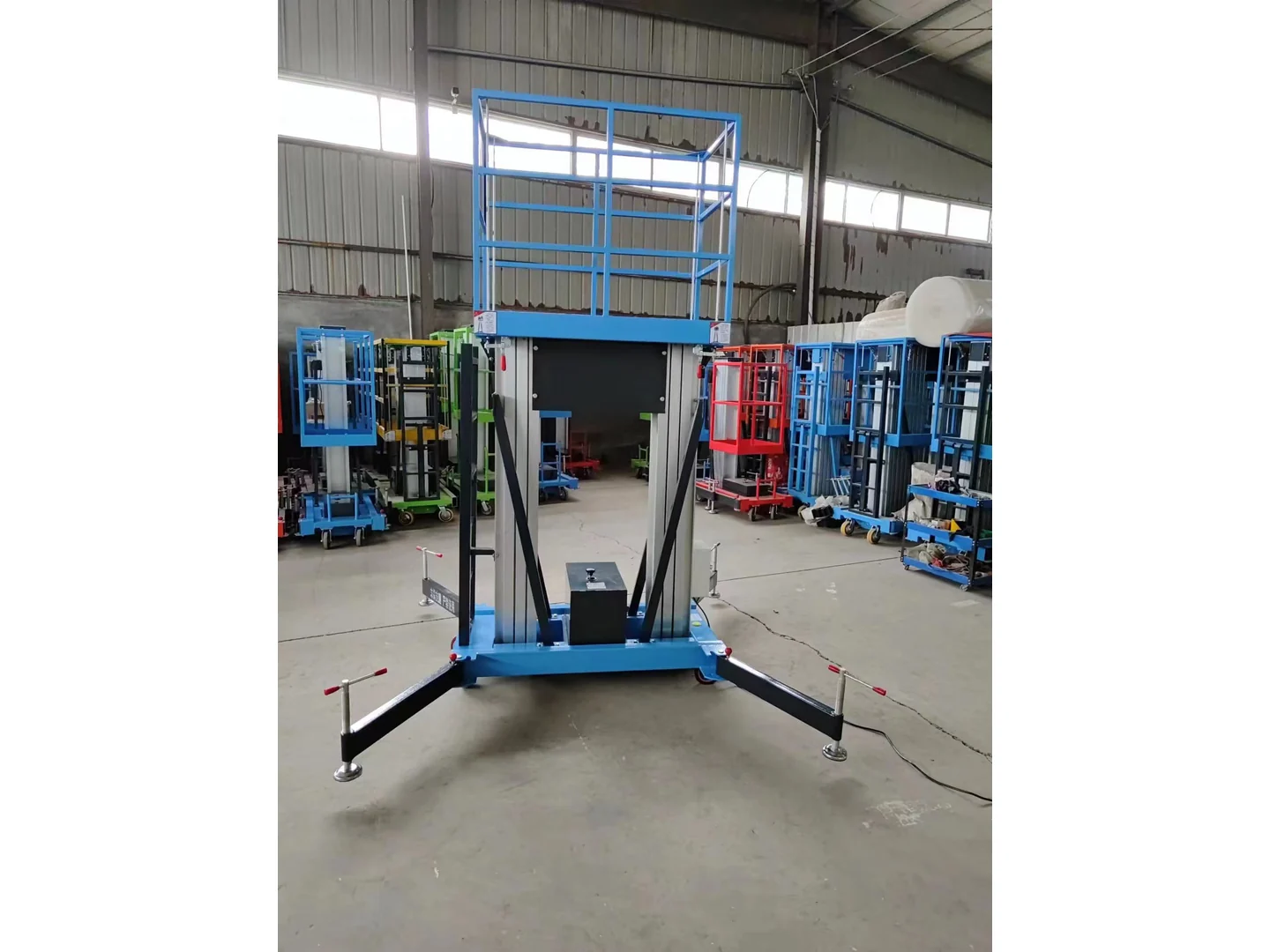
Complete blue double mast lift lowered with its stabilizers deployed among other equipment
Double mast · lowered front view

01 / Category boundary

Define the task before the configuration.

A double mast lift is the paired-column structural path within the aluminum mast lift family.

The mast label identifies the structural path shown on this page. It does not replace project review of the platform task, support layout, access dimensions, power context, floor and environment.

Vertical requirement
State the required platform position and work point separately.
Support and setup
Measure the available footprint and record the floor condition.
Movement envelope
Check doors, aisles, turns, transitions, transport and storage space.

02 / Equipment guide

Understand the structure and compare the task.

Connect the equipment arrangement to your work area, movement route and operating conditions.

Structure and movement

A double mast arrangement uses a paired mast structure to define the platform's vertical path. The platform, paired masts, base and setup supports have different measurement boundaries. Use a labelled sketch so a platform dimension cannot be mistaken for the complete equipment width.

Describe how the equipment reaches the work area, where it is set up and where the platform must be positioned for the task. The folded movement envelope, support footprint and raised arrangement should be considered separately, including obstructions beside and above the equipment.

Compare the series in context

Compare this series with single or multi mast using the same project inputs. Request clarification of platform space, load context, stored envelope and power arrangement for the series being discussed. A paired mast structure does not by itself confirm a rating or an operating condition.

Conditions to establish

Provide doorway and aisle dimensions, turning space, the available setup area and floor conditions. Describe people, tools and materials in the platform task. Keep site measurements separate from dimensions taken from an equipment document.

03 / Applications

Place the equipment in its working context.

Start with the task, access route and surrounding conditions, then review the configuration against the complete site brief.

01

Paired-mast structure review

Use this path when a paired mast arrangement needs to be considered for a defined platform task.

02

Platform and support planning

Review the platform context and deployed support area together instead of choosing from the mast name.

03

Building-route coordination

Include doorways, aisles, turns, storage and delivery access in the same enquiry.

04 / Selection inputs

Review the paired mast, platform and deployed support envelope together.

Use measured inputs and a clear task description so the series can be reviewed in its real movement and setup context.

  1. 01

    Platform position

    Record the required platform height and describe the work point or access task.

  2. 02

    Platform task

    Describe occupants, tools, materials and the usable platform context needed for the task.

  3. 03

    Support footprint

    Measure the available setup area and note nearby walls, equipment, edges and other obstacles.

  4. 04

    Movement route

    Provide the narrowest doorway, aisle, turning point and floor transition on the route.

  5. 05

    Stored and transport envelope

    Explain how the unit will be moved, transported and stored between work areas.

  6. 06

    Power and environment

    State the available power context, floor condition and indoor or outdoor use.

05 / Project path

Turn site information into a reviewable brief.

Keep the project sequence visible so measurements, configuration questions and supporting files reach the enquiry together.

  1. 01

    Describe the platform task

    State the work point, people, tools, materials and clear platform area required.

  2. 02

    Measure movement and setup

    Record the route dimensions and available support footprint at the work position.

  3. 03

    Review the paired structure

    Confirm the structure path together with the stored envelope, floor, power and environment.

06 / Buyer questions

Planning FAQ

Common questions about equipment selection and preparing your enquiry.

01 What should I include in an enquiry about Double Mast Lifts?

Provide the platform and work-point requirement, platform task, access-route measurements, support area, stored envelope, power context, floor condition and destination.

02 Can the series be selected from platform height alone?

Platform height should be reviewed together with the platform task, mast structure, support footprint, movement route and operating environment.

03 Why are folded and extended views both useful?

The folded view helps explain the movement and storage envelope. The extended view helps explain the vertical structure and deployed support context.

04 Do site photos replace measurements?

Photos add context, but measured dimensions or a simple drawing are still needed for doors, aisles, setup space and work position.

Start the project brief

Send the interface, route and site context.

The product family is carried into the enquiry form so the follow-up starts from the right category.

Request a project review
Quick enquiry Full quote